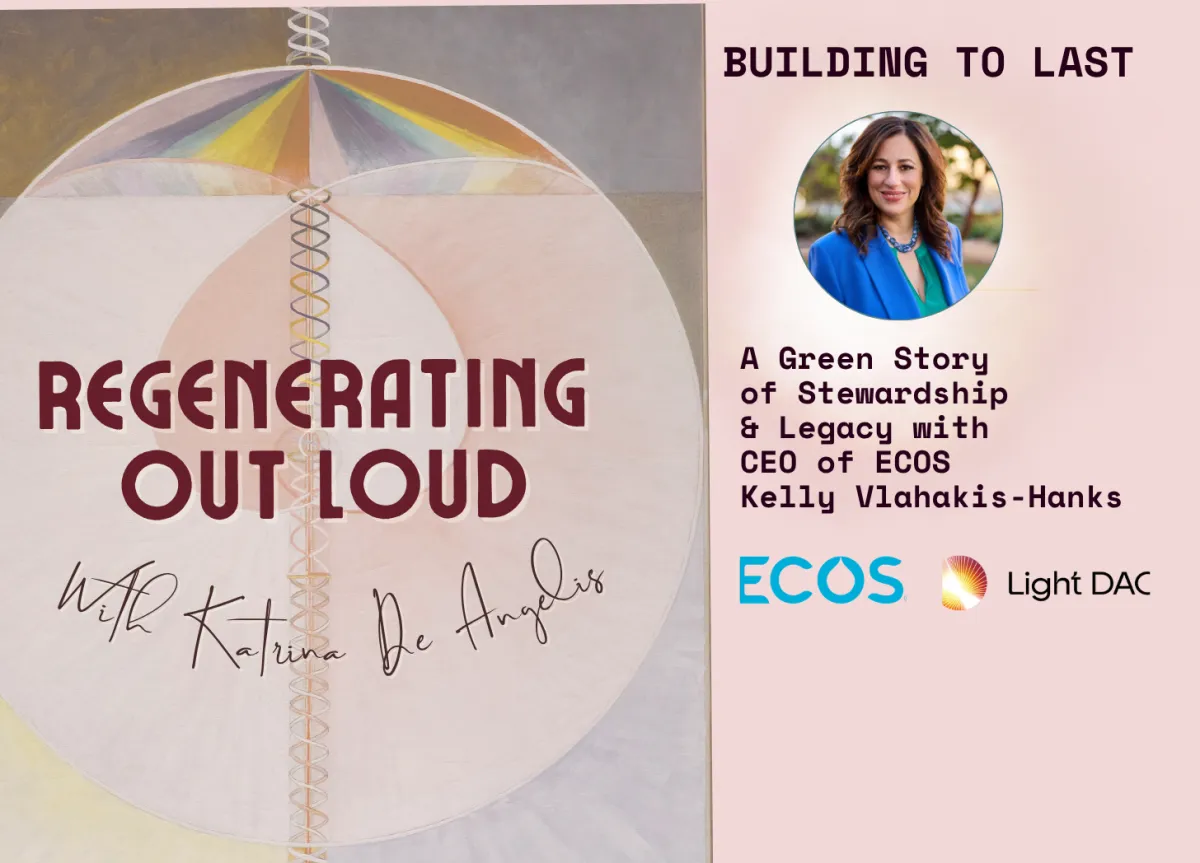
Regeneration at Scale: Kelly Vlahakis-Hanks, CEO of ECOS the #1 Green Laundry Detergent
Regeneration at Scale: Kelly Vlahakis-Hanks, CEO of ECOS the #1 Green Laundry Detergent
Kelly shares what six decades of family ownership have taught ECOS about stewardship, scale, innovation, and long-term decision-making.
About your host
Katrina DeAngelis is a leadership strategist and regenerative business architect who works with founders, leaders, and teams to build greater cohesion, developmental capacity, and more regenerative ways of operating. Her work sits at the intersection of leadership development, organizational design, culture, and the systems shaping how businesses grow.
She is the founder of Evolving Potential and host ofRegenerating Out Loud, where she explores how people are redesigning business, leadership, and society from the ground up.
Regeneration at Scale with Kelly Vlahakis-Hanks
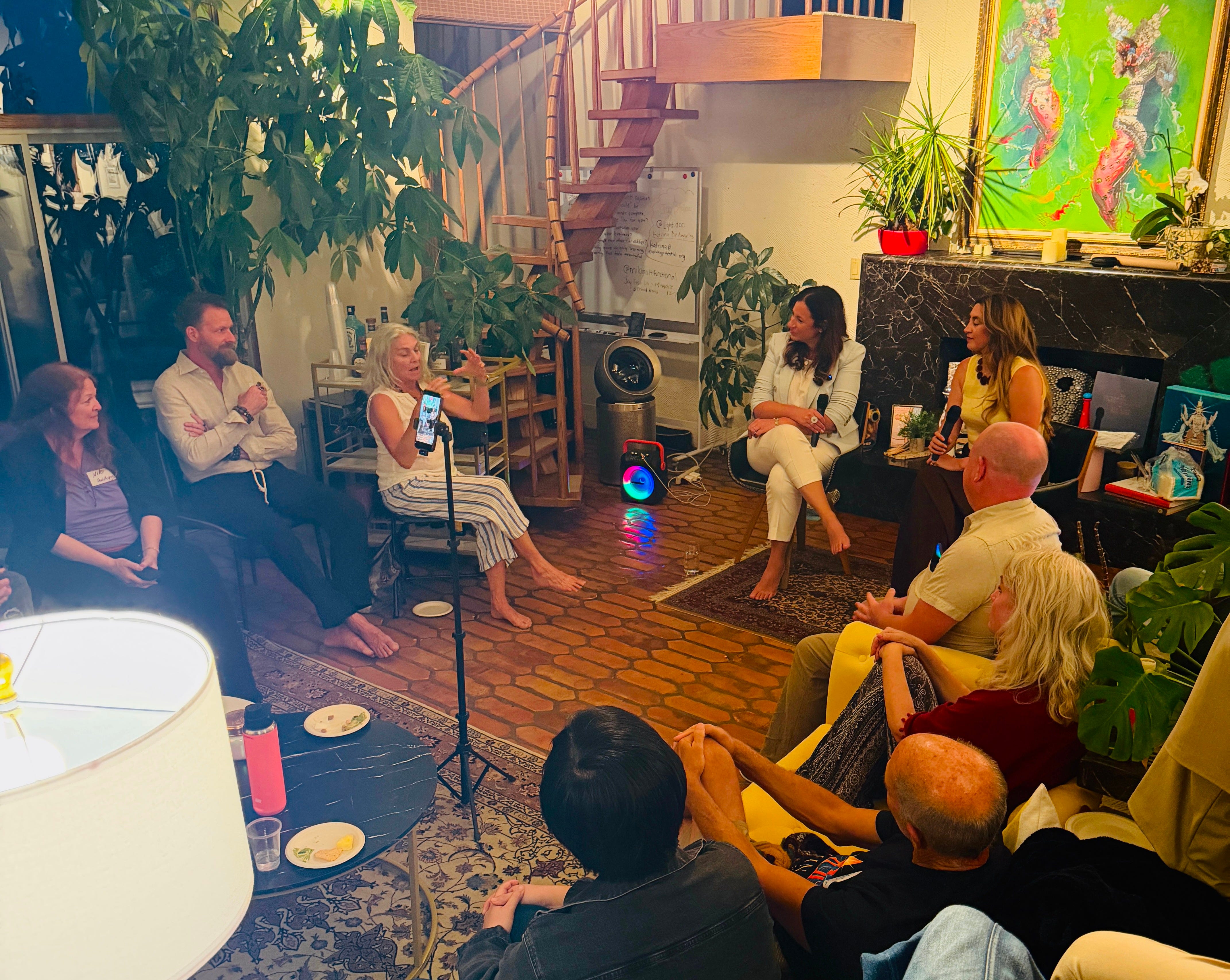
These episodes ofRegenerating Out Loudare live recordings taken from fireside chats with Light Dao here in LA, where we bring together founders, investors, technologists, and system builders who are exploring how we shape the future more consciously and building more regeneratively.
Thanks for reading Regenerating Out Loud with Katrina De Angelis! Subscribe for free to receive new posts and support my work.
Light Dao is a global network of entrepreneurs and investors committed to building a more regenerative ecosystem and value aligned businesses.
Today we are diving in for a fireside chat with Kelly Vlahakis-Hanks, President and CEO of ECOS, the plant-powered cleaning company founded 59 years ago.
Today, she leads four US manufacturing facilities and a European manufacturing platform, and under her leadership, ECOS has become the number one selling green laundry detergent in the US.
She serves on boards, including the XPRIZE Foundation, and has been recognized globally for sustainability, conscious business, and corporate responsibility.
Kelly has helped steward a legacy company at scale while embedding care for people, resources, the planet, and the wider ecosystem into how the business operates.
She is proving regeneration at scale and is a rare example of what it looks like to build and steward a company over generations while continuing to evolve its impact.
Building a Company to Last Longer Than a Lifetime
Katrina: Before we dive in, you were sharing an example about wine and building for the long term.
Kelly:I absolutely love wine, and I love going to Napa. So I really love that parallel.
When you’re thinking of wine, you’re dealing with crops just as we do at ECOS, right? They’re plant-powered ingredients. You’re taking those crops. You’re making a batch, just like we would make a batch. You’re checking pH. You’re checking viscosity. You’re filling a bottle. And so there’s a lot of similarities between how we make our products.
I interviewed Bill Harlan, if anyone knows Harlan’s properties. So Harlan and Promontory and Bond and Napa Valley Reserve, and they’re all biodynamically farmed and organic grapes.
In that interview, he talked about how he built his properties there. And he said in the ’70s that Mondavi had sent him to France and had asked him, “Go to France and see what makes a great wine estate.”
So he goes over to France, and he says there’s three things that make a great estate.
Number one, they’re family-owned and operated because family’s the only entity that’s not constrained by time and willing to take risk.
Number two, they have little to no debt.
And then number three, they’re built to last longer than a lifetime.
So he put together his 200-year plan for Harlan Estates. And when he gave that answer, I was like, “That’s ECOS.”
Stepping Into Leadership of a Family Business
Katrina: We did a little bit of an intro earlier, but I would love for you to introduce yourself. In that story, I would love for you to bring in what it was like during those first few years that you stepped into CEO and president. What were those first few years like in shaping where ECOS is today?
Kelly:My father started our company in 1967. He was originally from the island of Crete.
He grew up in Greece during Nazi-occupied World War II Greece, some very difficult times, the civil war. So he hid on a ship, came to this country in the 1950s, and ended up studying chemistry because of all the Greek root words.
He went on to become a chemist. During those days, they were working with very toxic chemicals, and he started thinking about his mom back in Greece using vinegar and lemon and all of these natural ingredients from the earth, and how these things did an incredible job.
He was wondering very early on why we would expose ourselves to so many dangerous toxins.
He led our company from 1967 until 2014. Very passionate, visionary person.
When I joined him in the business in 2003, we were still a very small company. Our company name is Earth Friendly Products. The brand is ECOS, and in 2014, I extended that brand across our entire portfolio.
But it was still very small in 2003. We were making products by hand. We were making them for natural stores. We were making them for co-ops. We had yet to call on the larger conventional players.
I certainly remember in 2003, 2004, 2005, spending several years calling on Costco and Walmart and Target.
It was incredible to work alongside him for 11 years.
In a family business, it’s always very difficult when you have the founder pass away after 42 years, and you have the responsibility of carrying on.
I think that one of the greatest things that you can do for someone you love when they pass away is take care of their child.
For my father, the company certainly was his child. So that was a really great opportunity for me to shepherd that child and to grow that child.
It’s been an exciting 12 years in the business. The business has more than tripled in size. We’ve become the number one selling green laundry detergent.
Actually, for the first time, if you look at the top 10 brands, including conventional brands, you see a green laundry detergent on that top 10 list. We’ve moved to the ninth spot, going for that eighth spot.
It’s a moment where people are reading labels and looking at ingredients, and they finally are beginning to understand what he said so long ago, that cleaning products actually really affect human and planetary health, and it’s one of the decisions that we can make.
But those early years were very difficult.
Like many smaller family-owned companies, we hadn’t really set up to scale for growth. In 2015, when he passed away, there was no COO. There was no CFO. There was no VP of sales or VP of marketing. We had none of those functional areas.
One of the first things I did was bring in a team and put together a team, both people that had grown up inside the business and people from outside the business.
We put together a strategic plan to transition from natural stores into the conventional stores and make sure that the ECOS brand was something that would grow and would thrive, always focusing on our mission to protect human and planetary wellness in all of those decisions.
Also being really focused on remaining family-owned and operated.
Throughout all these 60 years, I’ve never taken any outside money. No private equity, no VC, nothing else. We’ve really done what we could with the resources that we had.
It’s been a slow and steady race, and I’m really proud of where we are today.
Making Decisions With the Next Generation in Mind
Katrina: You’ve been earth-friendly from the beginning. That was a core part of your father’s business and what he wanted to bring into the world. When you think about stewarding that legacy long term, how does that impact the decisions that you make every day, especially when it comes to growth and scale?
Kelly:One of the great things about being independently owned, if you look at all my competition, they’ve all been acquired, right?
Seventh Generation was acquired by Unilever. Ecover, Method, Mrs. Meyer’s acquired by SC Johnson.
They have to make different decisions, whether they go public or they’re acquired by a strategic.
I have the great fortune of being able to make decisions for the long term. I have the great fortune of being able to make decisions with the next generation in mind.
It’s a long-term game.
Making sure that our mission of human and planetary health is the lens which I look at all decisions that I make, and I make sure that it’s aligned with that mission.
It’s a beautiful moment that we sit in because consumers are rewarding us for that. Consumers like transparency. They like companies that are doing the right thing. They like companies that have taken a stand and held fast to it.
It’s not always the fastest way to make money, for sure.
You have to say no to a lot of opportunities so that you can say yes to the right things, the things that really support the vision of the company.
I think that’s why we are where we are today.
It’s a lot of difficult decisions along the way, passing up on opportunities.
A large part of my business is also private label, and opportunities come along to make this brand or that brand.
“But can you just cut this corner? Can you just do that thing? Can you use this ingredient?”
It’s very tempting. “Oh, wow, look at that opportunity.”
In the end of the day, it doesn’t align with our core vision and our mission, and so we say no to those things.
I think that’s really important for the long run.
Saying No When Growth Conflicts With Your Values
Katrina: Has there ever been anything that comes up that you remember that you had to say no to, but it was a hard no? Something that really pushed you and your team to think through how your values show up in decision-making?
Kelly:So many things.
Certainly with some of my largest retail partners, the opportunity to do their private label. That’s something that is very lucrative for a business like ours.
There are many private labels that I love doing.
But I’ve had some really large retailers where I had incredible opportunities to make their private label, but I had to use something that I wasn’t aligned with.
I make sure to always lead with what we’re good at, what we do, what we bring to the table, the skillsets, the strength, that we can create products that are very sustainably manufactured with the greenest chemistry.
But there’s been several occasions when it got down to the final bid.
In those final hours, when you’re competing against conglomerates all around the globe for these very large contracts, and you get to those final stages, there’s three people left in the game, there’s two people left in the game, and you see the prize.
But in the end of the day, to hit that price parameter, to hit that target, you’d have to make a decision that was out of alignment.
I’ve had to make that decision more than once.
Certainly, if you’re on my sales team and you’ve worked really hard to make that deal happen, that’s a difficult conversation to have.
Also making sure that I have a team of people that are really aligned with the vision certainly helps foster that and make those difficult decisions.
From Zero Waste to Climate Positive
Katrina: ECOS holds a trifecta of certifications and is the first of many manufacturers to do so in the US. You went beyond carbon neutral, energy neutral, water neutral, and really towards positive. What was it like to get there, and why is it important to you to hold those certifications?
Kelly:I think it goes to the authenticity of our brand.
To really deliver something that delivers on protecting human and planetary health, we had to really take a look at how we were manufacturing our products.
What was our footprint on our beautiful shared planet?
We have one Earth. That’s our shared home. Oikos is the Greek word for home.
After my father passed away, he had really led everything in terms of green chemistry and given an incredible foundation to the company with that.
In 2015, I started thinking a lot about how we manufactured, what we were doing.
The first thing we looked at was how to become a zero waste facility.
To get to zero waste in your home can be challenging. To get to zero waste in four manufacturing facilities when you’re producing for some of the world’s largest retailers is certainly a challenge.
I had an incredible VP of sustainability who’s now retired, but was with me for 20 years. She had two PhDs.
I would literally show up at work, she’d be in the trash can. She’d have a water bottle, and she’d be saying, “Who did this? Who did this?”
I’d be like, “Dr. Notaraye, I don’t know if my insurance covers you in the trash can.”
She’d be walking around the factory. “Who brought this plastic water bottle?”
It takes that kind of conviction and that kind of belief and that kind of steadfast approach to really get everyone excited.
We needed every single person in the building thinking about the products they were bringing into the building.
When we banned styrofoam and then we banned plastic, then we started working with our suppliers and said, “Hey, listen, this box, I don’t wanna put this box in the recycling bin. First we have to be able to reuse it. Let’s reuse it until the end of life. And then at the end of life, let’s bail it. Let’s make sure it gets to the recycler who’s actually going to recycle the box.”
Because we know a lot of wish cycling takes place in this country. Twelve percent of things are actually getting recycled.
So to create that relationship with all of our suppliers and then make sure that we brought in really talented recycling team members to make sure that we separated everything as we should.
First of all it was about reusing, rethinking, recycling being the very last thing.
Within a few years we were able to divert more than 99.8% of our waste from the landfill.
We track that. We monitor that.
We can’t get to 100% because we have visitors. People come and I can’t always monitor everything that they leave behind.
But at 99.8%, I’m really proud of what our teams have accomplished.
With that, we got the TRUE Platinum certification.
Then LEED came out with their net zero certifications. In 2021, we became the first manufacturers in the nation to get the LEED net zero waste, net zero energy, net zero carbon certifications.
It was a big part of our move to being climate positive.
Let’s do everything we can to minimize our impact. And then how do we start restoring things too?
We get certifications for everything.
I want third parties checking each and every thing that we do.
There’s a lot of greenwashing that goes on, as everybody knows all so well. A lot of marketing in the green space.
Making sure that we’re always looking for third parties to audit us, whether it’s NSF for the Safer Choice certification, whether it’s LEED for the net zero certifications.
Making sure we do those things as well, and that we report on all those things and track those things.
Why Paying People More Made Business Sense
Katrina: In 2014 you raised the minimum wage to $17 an hour. A lot of companies would say, “We can’t do that right now. It’s too expensive.” Why was that actually a good business decision?
Kelly:I remember in 2014, and of course we went to $17 in 2014.
Now $17 doesn’t sound like much, but back then there was no $15 an hour conversation happening. So it was a big move.
I remember doing media and other things and they were like, “All these jobs are gonna be lost.”
I’ll tell you, in the end of the day, it’s expensive not to do the right thing with your employees.
If you do not retain a really talented team, you have the loss of corporate memory, you have the loss of productivity, you have all sorts of efficiencies that you lose.
The retraining costs, the rehiring costs.
There’s so many things that hit companies’ bottom lines that they just don’t recognize that if they don’t take care of their people, their people won’t take care of the company.
Taking a stand on a fair living wage in 2014 and taking a stand at $17 an hour back then was really important to me because I wanted to make sure to communicate that our people are our greatest assets.
If you come to visit us at ECOS, and I hope you will come to visit us at ECOS, you’ll see that we have team members working in manufacturing 20 years, 30 years, 40 years.
We have generations. We have grandparents, their kids, grandkids.
It’s a beautiful thing to witness.
To build a team like that, you have to take care of that team.
Creating the Conditions for Change
Katrina: Has there ever been something that was potentially harder to move through for your people? Going to 99% zero waste and all of this, there can come resistance that emerges. What has some of that resistance been like?
Kelly:Of course there was definitely resistance at the time.
You really wanna get people’s buy-in.
It’s never something I wanna do that’s punitive. Like, “We’re gonna punish you. We’re gonna punish you.”
It’s, “Why are we doing this?”
It’s the teaching. It’s the educating. It’s the coaching.
It’s really making sure that people understand the why.
It’s making sure that we gave them the tools to do better.
“Hey, listen. You come in every day with your styrofoam cup. We’re gonna give you this ECOS mug. We’re gonna give you this glass container. We’re gonna give you the tools so that you can go back into your homes, into your communities, and you can share what we’re doing here.”
If you come to the businesses even around ECOS, they all know if an ECOS team member goes in, they won’t give them a styrofoam container. They’ll wait for them to give them a reusable container.
A lot of it was educating, coaching.
The senior management has to believe in it.
I myself was walking into people’s offices saying, “Come on, we gotta sit down here. We gotta get rid of these things.”
It’s educating, spending the time.
I think a lot of people don’t wanna spend the time to teach and coach, so they put punitive systems in place that people will resist long term, and they’ll find workarounds and all sorts of things.
But if you can really spend the time and the energy to get people’s buy-in, I think that is really transformative.
Then making sure that all levels understood.
It doesn’t matter if you’re on the production line, if you’re in batching, if you’re in our labs. Wherever you are working, we made sure that we got your buy-in.
Then we created all sorts of reward systems.
We created Friends of the Earth so that we’d have people that would champion things.
There was a moment in time when the backs of our labels weren’t recyclable, and so we were trying to figure out what to do.
I had a production team member that said, “Hey, I read about this program at NASA where they’re using this to create fuel.”
Then we created a program with NASA where we were sending them the backs of our labels.
Great ideas came from all throughout the company.
Making sure that we really celebrated people that came up with ideas, we elevated them.
That was also a really important part in terms of really getting the buy-in of everybody.
Building a Culture of Innovation
Katrina: You built a team around innovation. What does innovation mean to ECOS, and what does that look like? What has having an innovation team actually done for your business?
Kelly:I have an incredible chief innovation officer who leads a wonderful team of R&D chemists.
But innovation is something that’s a through line, no matter what department that you’re in.
As a CEO, one of the things that you wanna make sure is that you never go over a technology cliff.
Everybody looks at Kodak and says, “They should’ve been in the business of preserving memories, and they should’ve been agnostic to how those memories were preserved.”
I feel the same way at ECOS.
We wanna make sure that we’re part of creating a healthy home.
How do we do that? How do we reach that consumer? How do we communicate? How do we connect?
My innovation team is scouring the planet.
They’re looking for the latest, greenest ingredients.
There’s so many innovations in terms of green science.
They might be in Denmark working with enzymes. They might be somewhere else.
They might be at CES, the Consumer Electronics Show. I had an entire team down there.
That team was looking at what are the latest washing machines? What are the latest appliances? How do our products interface with those appliances? How can we make sure that we understand the unmet needs of the consumer?
My innovation team I’ve really tasked with ideating and creating without feeling any constraints.
Now, that can create tension with operations because operations is like, “Oh my God, what are they talking about now? How are we gonna actually commercialize this?”
Operations has to figure that out.
My innovation team, I really want them to think outside the box and to keep us really relevant, and to make sure that we deliver a product that really meets our consumers’ needs.
Having innovation at the forefront is really important.
Building Resilience Into the Supply Chain
Katrina: Have you ever had to remain agile and resilient with an ingredient? Putting people and planet at the forefront and then scaling, have you ever had to swap out ingredients because of it becoming too rare or endangered? How does a business at your size handle something like that?
Kelly:For sure.
I just had a risk call today where we were talking about coconut oil and making sure that we’re really proactive and making sure that we have a continual supply of coconut oil.
It has been a very unique year as a business, and there’s been plenty of shortages.
One of the unique things about our company is the four manufacturing facilities and the fact that I don’t have national purchasing programs. I have really localized purchasing programs.
We’re setting everything with similar specs because we wanna make sure if you buy it at Costco here or you buy it at Costco in UK, if you buy it at Costco in New Jersey, you’re getting the same product.
But anything I can source locally to our facilities, I do.
I look within a 500-mile radius, and I’m trying to make sure that bottles, boxes, anything that you can get in that local area, we get.
That’s very helpful to us because if you ever have a challenge, we’ve got multiple suppliers for all of our inputs.
I think it’s really good to have a very diverse supply base and to be able to call on many different suppliers.
Certainly during COVID, that was a superpower for us.
If there was any time in the business that I’ll tell you was a very difficult time as a leader, cleaning products were the number one weapon in the war on COVID.
In March when the whole world shut down, we didn’t just run one shift. We ran two shifts. We ran three shifts.
We never went home. We worked around the clock.
I suddenly went from running a business where it was very structured to suddenly being on the factory floor talking about we have to rise up when our nation needs us the most.
I certainly could not have imagined running something that felt like a military effort.
But that’s what it really did feel like making cleaning products during COVID.
At that time, the strength of our platform, the fact that, yes, you could have one facility, and you could consolidate everything, and you could save in cost by having everything in one place.
In our four facilities, we make all 200 products in all four of them.
It’s not like one facility does this and one facility does that.
Everyone makes every product.
It’s a big part of how we’re carbon neutral because we’re never shipping across the country.
Swapping ingredients, we have an incredible team of chemists that know what are some of the things that we would do.
If there was a supply chain shortage with coconut oil, could you use responsibly sourced or RSPO palm? Yes, you can.
Can you use palm that’s not responsibly sourced? No, you cannot.
Really strict guidelines if there is ever a shortage, what you can and cannot do.
There’s certainly been times where, if there is a shortage, we’re talking to that customer about, in the interim, can we supply you with a different product?
COVID was certainly one of those times.
Changing Standards Across an Industry
Katrina: You’ve also put in efforts beyond ECOS to push industry standards. It’s not just about ECOS. This is now also about an entire industry. What triggered that shift for you, and what are some of the things that you’ve been a part of pushing?
Kelly:With anything, the more knowledge you have, the harder it is to look away.
The reality is that in the United States today, there are no regulations around cleaning products.
A manufacturer can put whatever they want in a cleaning products bottle, and they can sell it to you.
There is no FDA or anybody that’s checking cleaning products for human health and safety.
The sad reality is people believe that if their home is clean, that their home is healthy.
In so many of these cleaning products, you have extremely toxic ingredients, and so people are spreading toxins all around their homes.
I know that the science is clear.
Ingredients are linked to cancer, they’re linked to asthma, they’re linked to nerve and organ damage.
The more and more you see these things, the more upsetting that it is.
These cleaning products, you’re washing your plates and your glasses. Then you put your food on those plates. You put your water in the glass. Now you drink out of the glass.
Think about taking your glass out of your dishwasher. You can smell the residue on that glass.
You might turn the product over, and it’s got skulls and crossbones and says, “Do not ingest.”
Yet every single day you are ingesting those ingredients.
We can’t turn our backs on the fact that our children are getting sick.
The fact that manufacturers are getting away with this is something that’s upsetting to me.
In 2017, the Cleaning Products Right to Know Act, I had been fighting for many years, flying to Washington, DC asking for regulation.
I realized I wasn’t gonna get there.
So the next thing is, all right, if you’re not gonna regulate it, let’s at least give people the information.
People should be able to look at the label. They should be able to read the ingredients, and they should be able to decide whether or not to bring those products in their home.
In 2017, we got that legislation passed here in California.
It was signed into law, and then it went into effect in 2021.
California became the first, and still sadly the only state that requires the disclosure of ingredients in cleaning products.
But it was a big moment because if 44 million people buying products now suddenly have the opportunity to read labels, are manufacturers going to make different labels for different areas of the country?
At the same time, I was fighting for that same legislation in New York, and I sadly failed.
The American Chemistry Council was very powerful.
The fight was that this is proprietary.
It’s the same fight you had in the food industry decades ago.
Cleaning products manufacturers are saying this is proprietary.
No, it’s not.
Anyone can reverse engineer ECOS. I can reverse engineer their products. They can reverse engineer mine.
We all know what’s in one another’s products.
The person who doesn’t know is the consumer who goes in the store, and they believe they’re buying a product that’s gonna make their home safer for their loved ones.
That was something I was really passionate about.
TSCA Reform is also something that we fought for.
I was so excited when they said finally, “All right, we’re gonna have TSCA reform,” which is the Toxic Substances Control Act.
It hadn’t been looked at in, like, 40 years.
There’d been 83,000 chemicals that had been grandfathered in, 43,000 that were still in commerce in 2017.
When it passed, they said they would check 10 chemicals a year.
That’s just a shame, right?
The first chemical they said they’d check was asbestos.
Who doesn’t know asbestos is bad for you? Did we need to waste time on that?
The second chemical they said they would check was 1,4-dioxane.
1,4-dioxane is in almost every cleaning product out there.
In 2008, we became the first company to manufacture products that were free of 1,4-dioxane, which is a known carcinogenic substance.
But it’s unbelievable because when it made the list, and I was so thrilled that it made the list, then they had a carve-out.
In the carve-out they said, “As long as it’s a byproduct of the manufacturing process, it’s okay.”
Your human body doesn’t say, “Oh, okay. I’ll accept that carcinogen because it’s just a byproduct.”
Ethoxylated surfactants create 1,4-dioxane.
We shouldn’t use them if they do.
There’s a long way to go.
But I am proud of the fact that today because of the Cleaning Products Right to Know Act, you can read ingredients here in California.
Please read the labels when you’re bringing a cleaning product into your home.
Cleaning, Disinfecting, and the Home Biome
Katrina: You said because you have a clean home doesn’t mean literally that you have a clean home. So many people are not aware or thinking that there would be toxic chemicals in something that you’re literally using to clean your home.
Kelly:COVID created a national conversation around cleaning products.
People were spending a lot more time cleaning, but the sad thing for me was the pendulum swung so far and everyone was disinfecting everything.
You understand you shouldn’t take an antibiotic every day.
You understand if you took an antibiotic every day, it really disrupts your microbiome.
But we also have a home biome.
We’re using these disinfectants, killing everything. Kill, clean, kill, clean.
If you have a blood spill in a hospital, absolutely. I get that.
But you’re literally cleaning your kids’ toys. You’re cleaning these areas that you live in.
There’s no need to be disinfecting.
I kept trying to tell people during COVID, “Please look at what the CDC is saying.”
It’s saying number one to clean.
Clean means removing toxins, germs, viruses.
COVID was an envelope virus that was easily disrupted with soap.
It was like, “Just wash your hands, everybody.”
Unfortunately, suddenly we saw people spraying disinfectant all over their children, themselves.
It was incredible.
Then you were suddenly doing something that was really harmful to human health.
A virus that was attacking people’s lungs, you were creating really, really dangerous indoor air pollution.
Indoor air pollution is, like, five to 70 times higher than outdoor pollution because of cleaning products.
You’re compromising your lungs at a time that you wanted to support lung health.
Cleaning products play a big role.
Living a Purpose Filled Life
Katrina: Somebody so busy like yourself, leading such a big mission, a lot of people and change in the world and industry, how do you stay sane and connected to purpose?
Kelly:I feel super fortunate that every day my mission of protecting human and planetary health is something that’s part of my life.
It’s who I am.
It’s how I live my life.
I believe in work-life integration.
It’s one thing.
If you have a purpose-filled life, if you have a life where you get to wake up every morning and live something that you believe in, it makes it a lot easier to do that.
What Consumer Companies and Future Founders Need to Know
Katrina: What do you think consumer companies need to understand over the next decade? And what do you think the next generation of founders can carry forward based on what you’ve learned as a company?
Kelly:I think for consumer companies, they have to really start prioritizing the health and wellness of their consumers.
People have more access to information.
They’re forensic consumers.
They’re on their phones. They’re searching. They’re googling. Now they’re using AI to put together all sorts of background and information.
I think companies that are driven by greed, that are driven by short-term capitalism, that are making decisions with profit in mind, that don’t have the planetary and health approach and the wellness approach, I don’t think that they’re gonna survive and thrive.
I think companies are gonna have to make very different decisions because I don’t think the consumer’s gonna tolerate it.
I think we have a consumer that’s much more awake now and much more aware now.
I think so many consumers have been adversely impacted by so many of these consumer product companies, whether it’s their health or the health of their loved ones.
I think that companies will have to make different decisions.
I think that founders, entrepreneurs, should realize that making these investments make financial sense as well.
Putting solar panels on your rooftop.
Yes, it’s an initial investment, but now all of my facilities, I have the limitless power of the sun.
That’s an incredible investment that has a wonderful return on that investment.
I think if we can take a longer purview, those entrepreneurs, those founders will see that those investments early on will pay out over the long run.
Audience Q&A
Protecting the Vision Through Governance and Succession
Audience: As you scale, how do you keep your vision and your values in line as this thing starts to expand? What’s your governance model to protect that?
Kelly:I have the great fortune of being independently owned.
I’m the president. I’m the CEO. I’m the chairwoman of the board. I have the voting stock of the company.
I’ve put together an incredible C-suite that’s really aligned with that mission.
When I put together the C-suite, half of my C-suite were people that had grown up in the company, those of us that had spent 10, 20, 30, 40 years in the company.
Then the other half came from outside so that we could really adopt some of those best practices and have more learnings come into the company.
Making sure that we’re all aligned on that vision, that that’s our North Star, and so that when we make decisions, that we never veer from that.
That’s very important to me.
In terms of putting together a board, I have a very small board.
There’s just three of us on that board.
Those are individuals that I’ve selected that are also very much in line with that mission.
The company itself is a very diverse company.
Sixty percent of our team is comprised of women, 40% BIPOC, with leadership that come from all walks of life, so we can better serve our consumers.
Making sure that leadership is all lockstep with the mission is important.
That’s why I’ve selected to not bring in outside money, to not have other people at the table driving different decisions, and to really remain steadfast in who we are.
Certainly, when all of my competitors were acquired, everybody said to me, “How are you ever gonna compete? They have such deep pockets. You don’t have those pockets.”
The way we did it was just through being authentic.
The authenticity, telling that story, staying true to who we are, has driven a lot of revenue growth. It’s driven profit.
The idea that you can’t be environmentally and socially responsible and profitable at the same time just isn’t true at all.
I wanna serve as an example of that.
It’s really about being very choiceful of those decisions, especially around money and investments.
Audience: But if something happens to you, how does the vision continue?
Kelly:I’ve got wonderful family members as well who are very much aligned.
I have other family members that certainly would join in.
I’ve got incredible team members that have become family through the years that are great leaders.
We’ve got a wonderful succession plan in place because you’re absolutely right. I can walk out, and anything can happen.
Making sure that you have people that are there and at the ready to carry forth that vision, 100%.
We saw that with my father’s passing in 2014.
I lost my father on a Sunday, one of the most difficult things.
I lost him to a heart attack. I certainly hadn’t expected to lose him in that moment.
I’ll never forget going into work the next day on Monday, all of the grief that you have when you lose a loved one.
I remember a few of my general managers saying, “Hey, should we go dark today? Should we not ship?”
And I thought, “Oh my God, the worst thing I could ever do is not ship the first day that he passed away. He’d be very upset about that.”
So no.
Not only are we gonna ship on Monday, we’re gonna ship as much as we can today in his honor.
Making sure that those succession plans are clearly communicated, that everybody on my leadership team has a deep understanding of those plans, so that God forbid anything happened, those plans are ready to execute at a moment’s notice.
Giving People Space to Daydream
Audience: You spoke beautifully about creating a culture of innovation within the organization. Could you speak to how you foster that? Are there ways that you’ve set up your divisions that encourage people from all levels to be contributors in that?
Kelly:In terms of our innovation team, every Friday is a day for daydreaming.
It’s a day where on Friday they work on passion projects.
They work sometimes on things that have nothing to do with cleaning products.
They look at adjacent industries. They look at things that are meaningful to them.
Giving them that space and that place to just come together and to work on all sorts of things.
Through those Friday sessions, there’s so many things that people have worked on that we didn’t think had an application to cleaning products, but then we transitioned into cleaning products.
Making sure that whether you’re in technology, or you’re in operations, or you’re in engineering, or you’re in legal, or you’re in sustainability, that you always have an innovative mindset.
That you’re never constrained by what’s already been done, but you’re always thinking about what’s possible.
If there were no barriers to that, what could that be?
We have a library of thousands of formulas that have never seen the light of day because maybe the consumer’s not ready for them yet.
Maybe that packaging is something that our retailer won’t put on the shelf yet.
But we’re just waiting for the day and hungry for the day that the consumer is ready for that, that the retailer is ready for that.
Rewarding people that have innovative mindsets, celebrating those people, making sure that in all things we’re constantly challenging people to continuously learn, making learning a big part of the culture.
Making sure that we’re giving scholarships for people to go back to pursue higher education, to bring that knowledge set back into the company, is really important to me.
At the time my father passed away, I was in an MBA program.
I certainly hadn’t expected to lose him, so I was doing my MBA at night, working during the day, and he passed away.
I took a nine-month leave of absence from the program, and I went back to the program.
I’ll never forget it.
People were saying, “You’re the CEO of the company. Why in the world would you need to get an MBA?”
For me, it was this wonderful time of day where I got to go into the evening and sit with people from all sorts of different industries and have discussions that I would never have at work and spend my evenings reading Harvard Business Review articles, things that I wouldn’t do if I just came back from a tired day.
It was a wonderful thing.
I put together a strategic plan that I rolled out that then took the company to the next level.
Thinking about learning all the time.
There’s a great quote that Kennedy had where he said, “Learning and leadership are indispensable to one another.”
I truly believe that’s absolutely true.
Innovation is about learning at all times.
Moving Beyond Single Use Plastic
Audience: When we buy your products and we get to the end of the product, what would you like us to do with the bottles?
Kelly:All of our bottles are 100% recyclable.
We’re using PCR in those bottles.
We’re also trying to get people to move from single-use plastic to other things.
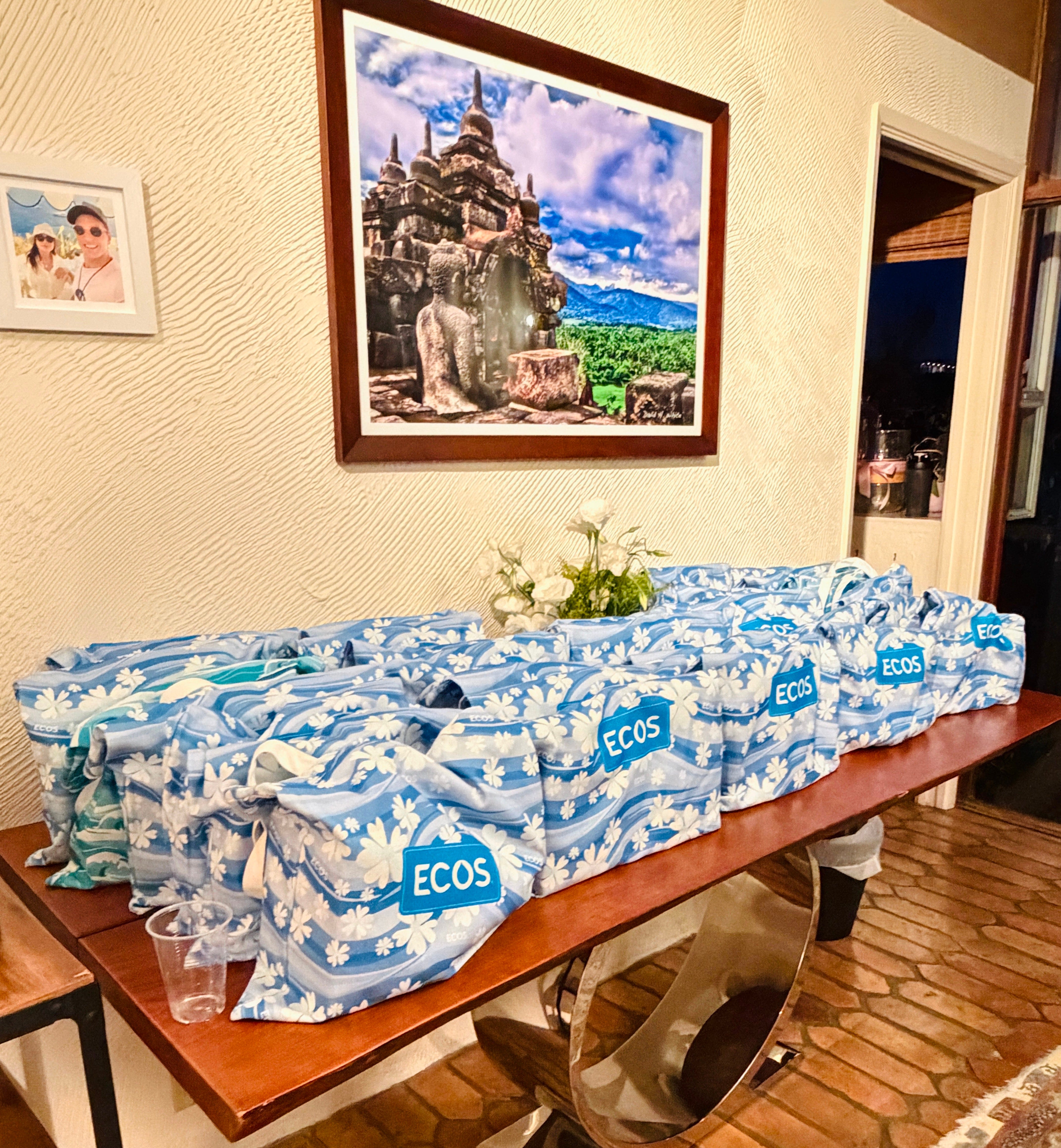
In your bags when you take them home tonight, you’ll see our aluminum laundry bottles because aluminum is infinitely recyclable.
Plastic you can recycle three times, but aluminum you can recycle forever.
We have our aluminum bottles.
You’ll see our laundry detergent sheets in your bag.
Sheets was something where we were trying to figure out, how do you get rid of plastic?
Okay, to get rid of plastic, we have to get rid of water.
Okay, so we have to dehydrate it.
If we dehydrate everything and we just have the surfactant in a sheet format, you already have the water in your laundry machine.
How could I sell you something in a cardboard box that you would take the sheet, you would put it into the water, it would dissolve completely?
Not like a fabric softener that leaves the sheet behind, but nothing being left behind.
We have our cleaning products in all sorts of formats, and it’s all about trying to get the consumers to buy those things.
I’ll never forget, probably about 15 years ago, I rolled out at Whole Foods Market refill stations.
I was so excited.
I was like, “Oh my God, this is it.”
We had refill stations everywhere in Whole Foods.
You would buy the bottle once, and then you would just take it back, and you’d refill it, and you’d refill it.
No one did it.
Nobody did it.
In the end of the day, the retailer will only carry it if the shopper will go and do it.
I watched those go in, and I watched those go out, and I was so profoundly disappointed.
Then it was like, all right, if the consumer won’t go back to refill it, then how do I make sure that I make something more sustainable for the consumer?
That’s when the laundry detergent sheets came about.
We became actually the first manufacturer in the country to make laundry detergent sheets.
We do that up at our Washington facility, and we’re adding that now to California and to our other facilities as that business is greatly growing now.
We did the aluminum bottles.
For now, if you get our plastic bottle, please do recycle it.
I don’t put any dyes in our bottles, so if you go and you look at the ECOS bottle, it’s always a clear plastic.
That’s also important to us as well.
But also check out our sheets, check out our aluminum, and then make sure that when we have these innovations to reduce plastic come out to market, buy them.
The wonderful thing about the sheets, you lightweight it, you can put it in your luggage.
You could use it to wash clothes in a sink.
You could tear the sheet apart. You can use it to wash your hands.
It has a lot of different applications.
Telling the ECOS Story Through Culture
Audience: Are you working with any celebrity endorsements and getting the word out through other forms?
Kelly:This year I’ve got my cousin Petros, who’s over here, who made that Life Positive video that you saw.
He also made another great video this year that I hope you guys will all check out.
It was with Nia Vardalos, if anyone has seenMy Big Fat Greek Wedding.
Maybe you sawMy Big Fat Greek Weddingwhere she used Windex and the family used Windex to clean everything.
For years I’ve been thinking about Nia and ECOS would be so great.
Here you have this wonderful Greek family story and ECOS is this great Greek word.
I kept thinking there’d be this evolution where suddenly the dad would see ECOS and know it was Greek.
We just did a wonderful commercial with her, and it’s a lot of fun.
She’s traveling from Greece back to the United States, and she’s going through TSA, and she gets stopped at TSA.
They open up her suitcase, and they’re going through it, and they’re saying, “You can’t have all these things that she’s trying to bring back from Greece.”
One of those things is our ECOS laundry detergent.
Then there’s a really fun pursuit where they run through the airport.
It’s a really, really fun piece.
Definitely looking for fun and innovative ways to tell our story.
Nia is such a wonderful champion for our ECOS brand.
We did a big Earth Day celebration.
It was a big fat Greek Earth Day at ECOS this year.
That was a lot of great fun.
Fragrance Free Products and Chemical Sensitivities
Audience: One of my friends can’t even tolerate natural fragrances. Do you have laundry detergent that is fragrance-free?
Kelly:Absolutely.
We have our ECOS Free and Clear.
Even though we’re using natural fragrances in the other ones, which is a combination of different natural essential oils.
I’ve literally traveled to the lavender fields, seen the farmers grow the lavender, ridden the combine, followed it through the steam distillation process.
When you’re buying our products, we have great supply chain transparency.
But for sure, there’s people that cannot even have those natural essential oils.
Our Free and Clear offering is actually our fastest growing of any of our SKUs because so many people now do have so many sensitivities.
The toxic burden that our bodies have experienced is incredible.
People are trying to find all sorts of ways to minimize impact.
Our ECOS Free and Clear has the National Eczema Allergy Certification.
We do all the RIPT testing, repeat insult patch testing.
All of our brand is hypoallergenic.
You’ll see the hypoallergenic certification on everything that we sell.
The skin’s the largest organ in your body.
You’re absorbing things through your skin oftentimes quicker than what you put into your mouth.
It’s super important.
Oftentimes people will have eczema and psoriasis and all of these issues.
They’ll be going to doctors, and the doctors will be looking at food elimination, and they’ll be looking at all sorts of things.
They won’t ask about the laundry detergent, which is oftentimes the very simplest thing that somebody can do to get rid of some of these illnesses.
A Green Story
Katrina: There was also a movie made about you.
Kelly:I could not have imagined Hollywood and cleaning products colliding quite like that.
There was a Hollywood feature film with Billy Zane and Shannon Elizabeth.
I was played by Shannon Elizabeth, if anyone ever sawAmerican Pie.
I appreciated she was Nadia, the foreign exchange student. So Kelly looked really great in the movie.
It’s a really fun movie.
It’s calledA Green Story.
If you’re ever bored one night on Amazon, you can watch it.
It’s a David and Goliath story about the small family-owned and operated business competing against the corporate giants and winning in the retail space because we’re doing the right thing for our consumers.
It really chronicles my father’s journey.
It came out in 2011.
Green Chemistry
Kelly:This year we just launched something at Natural Products Expo.
One of the things that our team have been looking at are preservative systems.
At the end of the day, you have to preserve a cleaning product.
It’s got water in it. It’s in a hot space. It’s in your car. It’s in your laundry room.
How could we preserve a cleaning product?
My team was able to develop a preservative from banana, and we call it Banatech.
It’s an incredible new preservative system, and it holds up against all the challenge testing.
I’m super excited about that.
This fall if you go to Whole Foods Market and you buy our multipurpose cleaners and you see our Banatech, that comes from the banana.
Katrina: Does it work in skincare too?
Kelly:There are applications in personal care as well.
It had never been used in cleaning products, but there are some brands that are looking at banana to preserve skincare as well.
It’s incredible.
Green science is constantly evolving and just making sure that we’re looking at those things.
I’m super excited about that latest innovation.
Audience: Did you use the peel?
Kelly:It’s from the stalk of the banana.
We’re not even taking the food source.
We actually had one product where we used carrot greens.
Everyone’s eating the carrot, but we used the greens of the carrot, and we did a really fun exclusive with Whole Foods where we had our carrot green dish soap.
That was a really fun project too.
Always looking at our products on how to upcycle and use things that people aren’t using.
Hopefully they’re composting it.
How We Can Support Companies We Believe In
Audience: How can we become brand ambassadors? How can we help you?
Kelly:There’s nothing more important than what someone’s friend group, what their loved one thinks about different products.
You are absolutely right about that.
I think social media has definitely amplified that.
Everyone’s looking for who they follow, who they look at, what they’re saying, what products they use.
We live in a time where it used to be, “Oh, I just buy what my mom did or my grandma did.”
Now people are looking to their peers to see, what are people that I respect doing?
What are the decisions that people that are in my community, that are like-minded, that care about what I care about, what are they doing?
For me, the best thing that you can go out and do is just share the word.
That is so very important.
Organic growth is everything for us.
Sharing our story, telling your friends, telling your community, being vigilant about the products you bring in their home.
Encouraging people to read labels.
Encouraging people to include cleaning products in their wellness journey.
People usually first think about what they put in them, the foods.
They think about what’s on them.
They’re just beginning to think about what’s around them.
There’s so many people that are eating organic foods, and they’re exercising, and they’re doing all these things, but they’re using really toxic cleaning products in their home.
If you could just encourage people to read labels, to think about cleaning products, and then just share our story when appropriate, I would deeply appreciate that.
Closing
There are so many things we didn’t get to talk about, and the things we did talk about offer such a clear example of how a regenerative mindset can move through different areas of a business.
From how you develop your people, to innovation, to upcycling ingredients, to having processes and plans to avoid overusing an ingredient, there is so much intentionality and thought that goes into it.
Thank you, Kelly, for being here with us and sharing your wisdom.
This conversation was recorded live as part of Regenerating Out Loud’s fireside chat series with Light Dao in Los Angeles. For more info onLight Dao, click here.
___________________
Here are 3 wonderful videos of ECOS to check out and take a tour of their manufacturing.